Tree Is Removed: What Happens Next in Your Yard
Have you ever wondered what becomes of that tree that was cut in your yard? The majority of house owners are of the opinion that the task is complete once the tree has been cut. Nevertheless, the removal of the trees is just a preliminary step toward the process that enables you to restore your landscape, enhance the safety, and work on your outdoor area in order to use it in the future. No matter what caused the removal of the tree, be it disease, storm damage, or your landscaping requirements, there are a few important steps to be taken in order to make your yard look tidy, secure and prepared to meet new prospects.
1. Cleaning Up the Debris
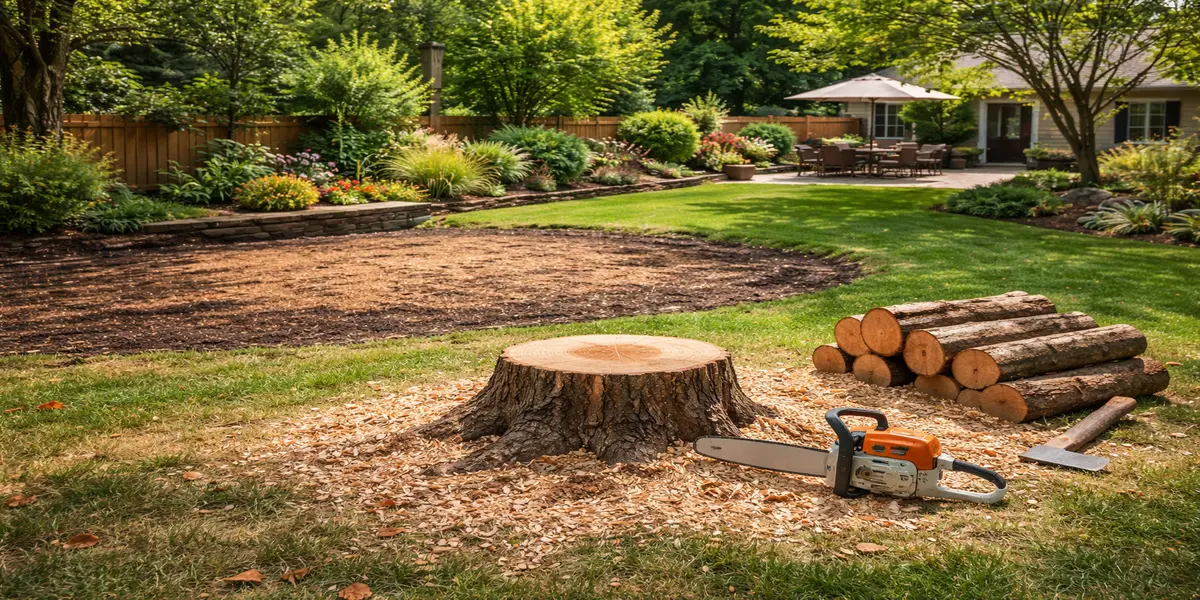
The cleanup process is one of the earliest that occur once a tree has been removed, as per tree professionals. Deforestation may result in debris in the form of branches, logs, leaves and wood chips lying in the yard. The removal of the debris is normally done by professional tree removal services so that your property appears to be tidy and clean.
Big logs are normally cut into manageable sizes and either transported or sold to the home owners as firewood. Majority of the smaller branches and leaves are collected and eliminated and your yard is left clean. This clean up exercise is needed since the remaining debris may cause hazard and leave your property disorderly.
2. Stump Removal or Stump Grinding
Once the tree has been felled, the tree stump will be growing out of the ground. It is also common to have the stump removed or ground down by many homeowners. The common practice is stump grinding in which special machines are used to grind the stump below the ground.
Removal of the stump has a number of advantages. It removes the possibility of tripping, the pests, such as the termites and ants, are not able to establish themselves in the rotting wood, and the aesthetics of your yard are enhanced. The left-over wood chips may be utilized as mulch or taken off according to your disposition upon grounding the stump.
3. Dealing with the Roots
Highly likely that the root system of the tree may still be in the ground even when it is no longer there. The roots will in most occasions decompose naturally with time. Nevertheless, in case the tree had large roots, and they were near structures, routes, or sewerage, the professionals could investigate the space to determine the absence of possible problems.
There are cases when big roots are cut to avoid the interference with further landscaping programs. The elimination of the problematic roots can aid in the protection of the surrounding foundations, driveways and underground utilities.
4. Sharing the Hole and Healing the Ground
When the stump grinding or cutting is done the ground can have a hole or an uneven surface where the tree was. The soil is normally poured here and smoothed to blend with the ground around it.
The restoration of the ground is the right way to make sure that your yard is safe and appealing to the eye. It is also the way to ready the area to be landscaped in the future when you intend to have grass, garden beds, or some other new outdoor attraction.
5. Landscaping Improvement Opportunities
There are many new opportunities that may arise when a tree is removed in your yard. The extra space and sunlight would not lose to other plants, grass or garden features. This is one of the chances many homeowners take to redesign their landscape.
You would think about planting fewer trees, planting flower beds, having a patio or just letting your lawn grow. As the amount of sunlight gets to the soil, grass can grow better leading to a healthier and livelier yard.
6. Soil Health and Recovery
Big trees consume much nutrients and moisture in the soil. After removing the tree, the soil is in a position to restore itself gradually and give nutrients to the other plants around it. Nevertheless, some assistance might be required to the soil in order that it might be restored to its stability.
Adding fresh top soil or compost or fertilizer may also be added into the soil in order to improve the quality of the soil and promote the growth of healthy plants. To make sure that the soil is arable and should be able to support new plants, some form of treatment can be advised by the professional landscapers or arborists.
7. Prevention of Pests and Safety in the Yard
Uncontrolled leftover wood or stumps can also attract pests which can be drawn to a tree that has been removed. Wood decaying insects such as the termites, beetle and ants appear to be particularly keen on the rotting wood. It is why the sufficient stump grinding and clearing of debris are the activities which must be taken after the removal of the tree.
Ensuring that the area is clean and well maintained will help in reducing the possibilities of the pests polluting other plants within the locality or even entering your house. Professional services like seattle trees care also recommend proper cleanup and stump management to keep yards healthy and pest-free. It also increases the overall safety of the yard, as there is no risk of tripping and unstable wood, accoring to expert teams.
Conclusion
Having trees removed is not a simple matter of chopping down a tree, but the start of your re-creation and beautification of your outside world. Since there is cleaning the debris, stump grinding, soil restoration, and area preparation are set to be used in the future landscape, each of the steps is significant to keeping the yard safe and appealing. The whole process is guaranteed to leave your property clean, secure and prepared to take on new opportunities when it is in the hands of professionals.